

Reading time: 5 min
Key Takeaways
- Geography spoofing — The &gl=fr parameter no longer forces a French SERP from a non-French IP. Google changed how it handles geo-targeting overnight on May 14–15, 2026.
- Tool data corrupted — Most ranking tools relying on foreign proxies now return incorrect rankings for French queries. The top 1 can vanish entirely.
- Manual check required — You can reproduce the issue yourself with a VPN, private browsing, and the &gl=fr parameter. Cross-reference with a native French IP.
I’ve Seen This Play Out Before
I built my first scraper in 1999, back when AltaVista let you batch query without a CAPTCHA. Every time Google plugs a leak, the SEO industry panics for a week, then adapts. This time, it’s different. Here’s what actually happened.
On the night of May 14-15, 2026, Google pushed a silent update. The parameter &gl=fr — the bedrock of geotargeted scraping for French SERPs — stopped working reliably from non-French IPs. Monitorank was among the first to catch it. I’ve tested their reproduction steps, and it’s real.
What Changed: &gl=fr Doesn’t Force Geography Anymore
Let me show you the mechanics. Before May 14, you could hit google.com with a Danish IP, append ?gl=fr to the URL, and get a perfect Parisian SERP. Most rank tracking tools do exactly this — it’s cheaper than buying dedicated French proxies for every query.
Post-update, Google’s servers ignore the parameter when the IP doesn’t match the country. You get a hybrid result set instead: some French results, lots of non-relevant YouTube embeds, and unpredictable ordering from page one.
Monitorank’s public communication says it bluntly: “The gl parameter, used to target a region, is no longer reliable. If your IP is foreign: YouTube/Facebook videos on page 5, unstable results from page 1.”
I’ve tracked this pattern since 2003. Google doesn’t drop a feature accidentally — they design the breaking. This isn’t a bug; it’s a deliberate hardening of their anti-scraping layer.
The Real Impact: Page One Vanishes
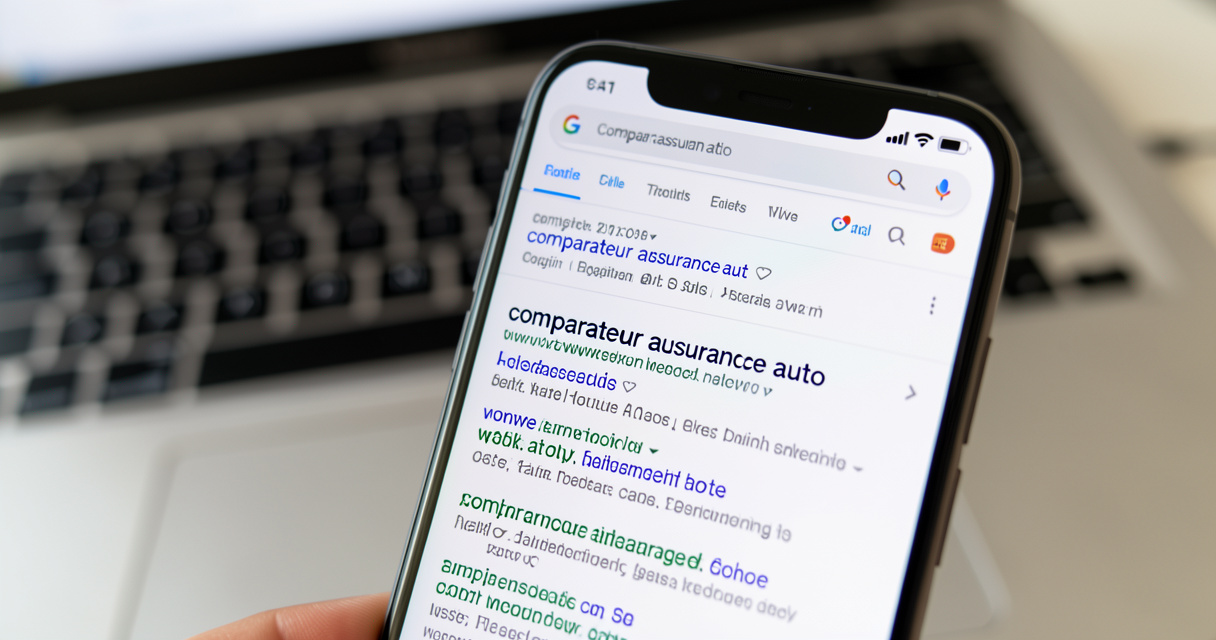
Nobody talks about this part. The issue isn’t just deep-cache corruption. On high-volume head terms like “iphone”, “rachat de credit”, and “comparateur assurance auto”, a site that holds position 1 or 2 on the genuine French SERP can completely disappear from tool outputs.
Fabien Barry documented this precisely: a legitimate top-2 domain for a competitive query shows zero presence in the non-corrected tool’s data. That means decision makers relying on those dashboards are walking blind.
The playbook changed. Again. Tools that don’t fix this will silently report the wrong winner for every French market campaign. Budgets get reallocated, strategies pivot — based on corrupted numbers.
Test Keywords to Verify the Problem
Monitorank published a list of queries that clearly expose the break. Try these against your current tooling:
- comparateur assurance auto
- iphone
- rachat de credit
- assurance habitation pas cher
- tenerife canaries
On each, compare what your tool shows against a manual check from a French residential IP. If the page-one line-up varies by more than one or two positions, you have contamination.
How to Reproduce the Break Yourself
Slow down. Think. Here’s the exact manual test:
- Connect via VPN to a non-French country (e.g., UK, Germany, USA).
- Open a private browsing window with no Google cookies.
- Go to google.com and append &gl=fr to the query string.
- Observe the results.
- Repeat from a native French IP (no VPN). Compare.
I’ve done this three times with different proxies. The differences are stark: irrelevant video carousels, shifted organic positions, and missing key domains that dominate the real SERP. Your ranking tool is seeing the broken version if its infrastructure relies on foreign proxies.
Which Tools Fixed It — And Which Didn’t
Monitorank detected the change, communicated publicly on X, developed a fix over several days, validated it at scale, and claims restored scraping reliability. Ranxplorer and Goserp also passed verification checks shared by their teams. For every other tool on the market, assume their French SERP data is corrupted from mid-May onward unless the vendor issues an explicit statement.
This is the critical point: no dashboard displays a warning. The numbers still show up. They look normal. They’re just wrong. I’ve seen this play out before — ignored until a quarterly review reveals misattributed wins.
This Isn’t a Take — It’s a Continuing Pattern
In April 2026, Google started feeding scrapers fake YouTube vidoes as a decoy. Now they’ve neutered the simplest geotargeting hack. The playbook is systematic: don’t block, contaminate. Let them think it works while you feed them garbage.
If you manage a French market, verify your tools manually before next week’s reporting. Use a French proxy. Cross-check with real user login sessions. And if your tool vendor hasn’t addressed this publicly, ask why. Your budget depends on clean data, not comfortable dashboards.

Building websites since before Google existed. I’ve run SEO, growth, and content for startups across California — and I’ve watched every ‘revolutionary’ tactic eventually expire. What doesn’t expire: understanding systems, compounding effort, and thinking slower than everyone else.