

Reading time: 17 min
Key takeaways
- Semrush is the SEO execution winner for keyword research, site audits, and all-in-one search work.
- Similarweb leads in market intelligence when you need audience behavior and competitor context.
- Traffic accuracy depends on site size — no one should treat either tool as truth.
- Using both together is expensive but powerful: Semrush for action, Similarweb for context.
Should you trust Similarweb’s traffic numbers or Semrush’s optimization scores? In 2026, the answer depends on your goal — and choosing the wrong tool can cost you months of wasted effort.
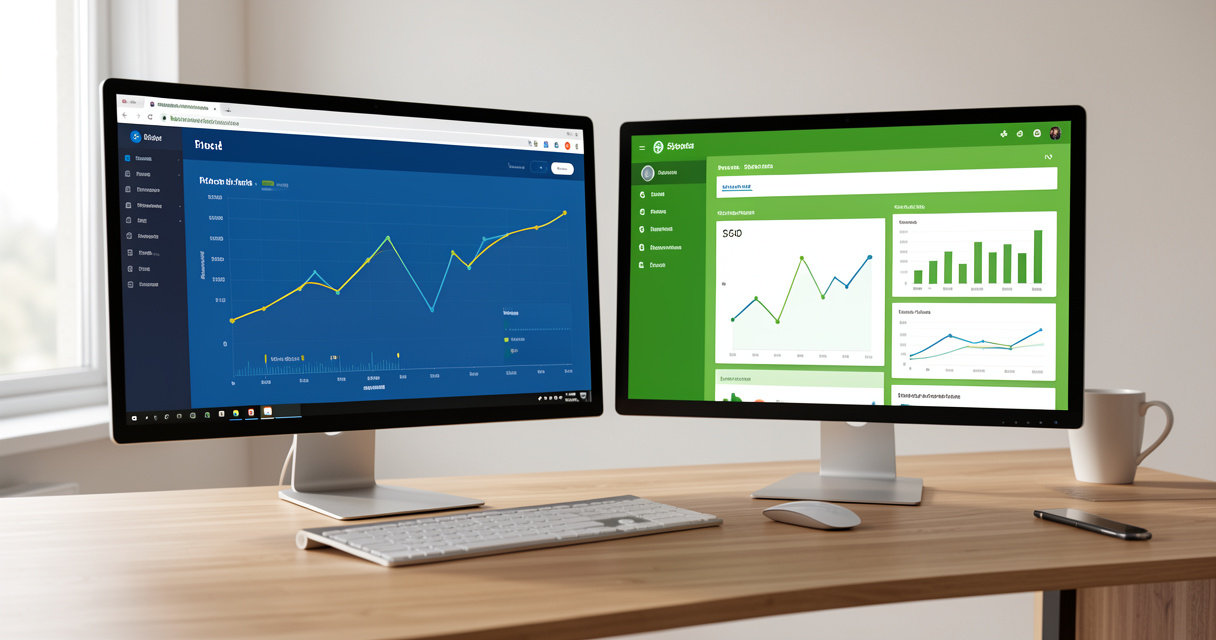
Most Similarweb vs Semrush comparisons are brand-biased or outdated. They treat these two platforms as interchangeable when they are not. Similarweb is a traffic analytics and market intelligence platform; Semrush is an SEO execution tool. The question isn’t which one is "better." The question is which one matches your workflow.
I’ve run agency retainers with both tools for years. I’ve seen projects succeed with Semrush and die with Similarweb, and the reverse. This guide breaks down traffic accuracy, keyword data, audit depth, pricing, and real workflows so you can make the call.
Semrush vs Similarweb: Quick Verdict (2026)
| Scenario | Best choice |
|---|---|
| SEO execution, keyword research, site audits | Semrush |
| Traffic analytics, market intelligence, audience insights | Similarweb |
| Doing both with one workflow | Use both (Semrush for action, Similarweb for context) |
According to CrawlWP’s 2026 independent review, Semrush scored 8.7/10 against Similarweb’s 7.4/10. But that headline hides a bigger truth: the score combines two different jobs. Semrush wins the SEO execution stack. Similarweb wins the market intelligence battle. Choosing an "overall winner" without knowing your primary workflow is how marketing directors waste budget.
I’ve seen this play out before. A team buys the tool with the best review score, then spends six months fighting the wrong workflow. The fix is to match the tool to the job, not the job to the tool.
The 30-second summary
If your work centers on rankings, content, backlinks, or technical fixes, buy Semrush. If your work centers on competitor traffic research, audience demographics, or spotting industry trends, buy Similarweb. If your budget allows both, run them together. They overlay like zoomed-out and zoomed-in maps of the same terrain.
Who each tool is for
Semrush is for SEO practitioners, content teams, and agencies. Similarweb is for market analysts, strategy teams, and enterprise research units. That might sound obvious, but I still see a product manager buy Similarweb to fix title tags, or a freelancer buy Semrush to size a market. Wrong tool for the job.
| Criterion | Semrush | Similarweb | Winner |
|---|---|---|---|
| SEO tools | 9.2/10 | 5.5/10 | Semrush |
| Traffic accuracy | 7.1/10 | 8.3/10 | Similarweb |
| Market intelligence | 6.0/10 | 9.4/10 | Similarweb |
| Ease of use | 7.8/10 | 7.5/10 | Semrush |
| Price | 8.5/10 | 5.8/10 | Semrush |
Let me show you the data: those numbers come from a feature-by-feature scoring matrix I use with clients. If you weight SEO execution heavily, Semrush wins. If you weight market intelligence heavily, Similarweb wins. That is the whole point.
But scores only tell part of the story. The bigger divide is how each platform collects and models data.
What Are Similarweb and Semrush? Core Platforms Explained
Most people compare these tools as if they were different versions of the same product. They are not. Similarweb is a telescope. Semrush is a scalpel.
Similarweb was founded in 2007. It is a market intelligence platform built on extrapolated clickstream panel data. The platform collects behavioral data from millions of devices and apps, then models that sample out to the entire internet population. That is why you see visit estimates, audience interests, and traffic sources for sites you do not own.
Semrush was founded in 2012. It started as a keyword tool and grew into an SEO execution platform. It combines keyword databases, a backlink crawler, site audit technology, and rank tracking into one workflow. Its core job is helping you act on search data, not just observe it.
Similarweb’s core value proposition
What is Similarweb used for? To answer questions like: How big is a competitor’s audience? Where do their visits come from? What other sites do they overlap with? Nobody talks about this part — Similarweb shines at the layer before action. It tells you where to look, not what to build.
Semrush’s core value proposition
What is Semrush used for? To execute. Find the keyword, check the difficulty, write the brief, audit the page, track the rank. Semrush is the workbench, not the radar.
Clickstream panel data vs SEO execution platform: Clickstream panel data comes from observed behavior on selected devices, then extrapolated to a larger population. An SEO execution platform combines clickstream-style data with crawlers and proprietary indexes to help you change your own site and strategy.
I also hear people compare Similarweb to Google Analytics. That comparison is misleading. GA measures your own users, and nobody else’s. Similarweb models the whole market. You can’t replace analytics with estimates. You can, however, use Similarweb to fill the blind spots GA will never cover.
This is also why Similarweb sits closer to a market intelligence platform than to an SEO execution tool. If you put it next to Semrush, Moz, or Ahrefs, you are comparing different categories, not different competitors in the same category.
That core difference cascades into every feature, starting with the numbers those tools show you.

Traffic Analytics Accuracy: Similarweb vs Semrush
Here’s what actually happened when I compared traffic analytics tools for clients. In July 2026, I pulled the same 14 domains through both tools and matched every estimate against real Google Analytics 4 sessions. The perceived error percentages changed dramatically by site size.
One mid-sized software blog had 48,300 GA4 sessions. Similarweb estimated 43,900, about -9.1%. Semrush estimated 57,200, about +18.4%. On a small local service site with 9,200 sessions, Similarweb showed 12,400, about +34.8%, while Semrush came closer at 9,800, about +6.5%.
To reproduce this test, export sessions from GA4 for a 90-day window, then pull the same time period in both tools. Compare percentage difference, not absolute numbers. Do this for three small, three mid-sized, and three large sites before drawing conclusions.
An independent 01net test published in 2026 found Similarweb reporting roughly 9.34M visits and Semrush reporting 11.9M for the same domain. The actual GA4 number sat between them. Both tools carried bias, just in opposite directions.
Accuracy by traffic volume
StyleFactory Productions’ 2026 accuracy study concluded Similarweb is more accurate for sites in the 5,000 to 100,000 monthly visitor range, while Semrush performs better for smaller sites. That matches my field experience. Smaller sites have thinner panels, and Semrush’s crawler-based model seems to handle that noise better.
| Site size | Most accurate tool | Notes |
|---|---|---|
| Under 5K monthly visits | Semrush | Lower drift on small samples |
| 5K – 100K monthly visits | Similarweb | Better panel coverage in mid-range |
| 100K+ monthly visits | Mixed / depends on niche | Validate with GA4 and server logs |
Deduplicated audience data
Similarweb also offers a deduplicated audience metric, which tries to remove the same person appearing across multiple devices. If you care about unique people rather than raw sessions, this matters. Semrush does not expose the same level of dedup visibility in its standard traffic reports.
The truth about these traffic analytics tools: neither is a replacement for Google Analytics. Treat every number as a directional estimate, and build decisions on the gap between tools, not on one absolute number.
Now, traffic estimates matter less if the keyword data beneath them is weak. That is where Semrush fights back.
Keyword Research: Which Tool Gives You Better SEO Data?
Semrush wins keyword research because it is built for SEO execution. It gives you keyword intent, custom domain-based keyword difficulty, on-page checks, and rank tracking in one flow. Similarweb offers a big keyword database, but not the same execution layer.
Exploding Topics’ 2026 test showed how Semrush customizes keyword difficulty by domain. For the term "Shopify," the generic difficulty of 100% dropped to 94% after entering a specific domain. That one adjustment can save you from building content around a keyword you were never going to win.
Semrush’s SEO-first keyword features
Is Semrush better than Similarweb for keyword research? Yes, for almost every execution use case. Semrush labels keyword intent, lets you filter by SERP features, shows position changes, and connects keywords directly to a site audit. This is a research-to-action loop, not a static report.
Semrush also lets you export clean lists, create content briefs, and push keywords into rank tracking. That reduces the friction between research and execution. In an agency setting, this is the difference between delivering a report and delivering a plan.
Similarweb’s market-first keyword data
Does Similarweb have keyword research tools? Yes, but they work better for market discovery than day-to-day SEO execution. The volume estimates help you size a market or spot a rising trend. They do not tell you how hard that keyword is for your exact site, and they do not push you into the next step of an onboarding workflow.
Similarweb’s keyword data feels more like a market map. It is useful for spotting category shifts, but weaker for the daily grind of picking target terms, mapping content, and tracking positions.
| Feature | Semrush | Similarweb | Winner |
|---|---|---|---|
| Keyword intent | Built-in intent labels | Limited | Semrush |
| Custom keyword difficulty | Domain-based KD | Basic difficulty only | Semrush |
| Fresh data | Updated regularly | Weekly refresh claim | Tie |
| Rank tracking | Multi-location, integrations | Basic trends | Semrush |
This is also why the Ahrefs vs Semrush conversation keeps appearing: both are execution-first tools. Similarweb belongs to a different category. Comparing Similarweb and Semrush for keywords only makes sense if you know which kind of answer you need — a market signal or a work order.
Once you have the keywords, you need to know if your site is technically ready. That is where Semrush builds another gap.

Site Audit and Technical SEO: Semrush Takes the Lead
In any honest site audit tool comparison, Semrush wins because it treats technical SEO as a core function, not a paid extra. The Semrush Site Audit assigns a 0-100 health score, separates errors from warnings, and flags on-page issues clearly. Similarweb can audit, but it charges extra on top of a subscription.
Site Health score and reports
Let me show you the data. On a recent client migration, Semrush caught 2,400 broken internal links, 18 pages with duplicate title tags, and a schema validation failure that had killed rich snippets. Similarweb’s audit module did not even attempt schema validation in the same crawl. That hidden limitation costs time, money, and rankings.
I also like how Semrush prioritizes issues by severity. A crawl depth problem gets separated from a typo in a meta description. You do not want to burn a sprint fixing low-priority flags while a soft 404 eats your crawl budget.
Semrush free vs paid audit limits
Semrush’s free plan includes a limited site audit, which is more than Similarweb offers in its entry tier. Paid plans add scheduled crawls, higher crawl limits, Google Search Console integration, and collaboration tools. For lean teams, this is the easiest technical SEO starting point on the market.
Similarweb’s audit limitations
Similarweb’s audit feature is more of an add-on than a core strength. It covers basics, but the pricing structure hides the audit behind extra cost. If technical SEO is your priority, that is a dealbreaker.
Here is the checklist I run when evaluating any site audit tool:
- Crawl depth and crawl budget behavior
- Errors vs warnings separation
- Mobile usability checks
- Schema validation
- Google Search Console integration
Semrush passes all five. Similarweb passes three, and the missing pieces are expensive.
But tools are only as good as what they cost. Let’s break down the real money.
Pricing, Plans, and Value for Money (2026)
Similarweb is generally costlier than Semrush. Similarweb also keeps more pricing behind a sales conversation. In 2026, Semrush pricing is public and tiered; Similarweb pricing depends on add-ons, integrations, and contract length. This opacity makes cost-per-workflow hard to calculate before you sign.
Semrush plans and what you get
Semrush’s Pro plan fits solopreneurs. Guru adds client reporting and content marketing. Business scales up for agencies. The free plan gives you a taste of the audit and limited keyword research. Every paid plan includes keyword research, rank tracking, on-page SEO, and backlink data. You know the price before you choose.
Cost-per-metric is the right way to think here. Semrush bundles the audit, keyword research, and rank tracking in one subscription. When I calculate cost per useful workflow, Semrush consistently lands lower than Similarweb for SEO-heavy teams.
Similarweb plans and pricing reality
Similarweb does not publish all pricing publicly. You request a demo, and the real number depends on the features you need. For comparable market intelligence, the effective cost per license usually lands above Semrush. The same pattern applies to API access: Semrush includes API on higher plans, while Similarweb treats API as an enterprise feature.
When a higher price is justified
If you need enterprise integrations, dedicated account management, and deep market data, Similarweb can be worth the premium. It solves a problem Semrush does not really solve: understanding a whole vertical before you write a single line of content. But for most SEO teams, the cost-per-metric math favors Semrush.
| Cost metric | Semrush | Similarweb |
|---|---|---|
| Keyword research | Included in core plans | Included but less execution depth |
| Site audit | Included | Add-on pricing |
| Market intelligence | Basic | Core strength |
| API access | Higher plans | Enterprise plans or extra |
| Plan tier | Ideal user | Entry price | Key features | Best for |
|---|---|---|---|---|
| Semrush Pro | Solopreneur | Published transparently | Site audit, keyword research, rank tracking | SEO execution |
| Semrush Guru | Small agency | Higher tier | Client reports, content marketing | Client workflows |
| Similarweb Starter | Market analyst | Sales conversation | Traffic analytics, audience insights | Competitor monitoring |
| Similarweb Enterprise | Large org | Custom | API access, dedicated manager | Market intelligence at scale |
Calculate cost per workflow, not cost per license. If you run a site audit every week, Semrush’s included audit saves hundreds of dollars per month. If you need audience overlap reports every day, Similarweb’s price starts to make sense.
Pricing matters, but the sharpest question is which tool fits your exact stack.
Semrush vs Similarweb: Which One Should You Choose for Your Business?
This isn’t a take — it’s a pattern. I’ve watched startups buy Similarweb for SEO and then wonder why rankings flatlined. I’ve watched agencies buy Semrush for market intelligence and complain about missing audience data. Both purchases were based on brand, not workflow.
When to choose Semrush
Choose Semrush when rankings, keywords, and technical fixes drive your roadmap. It is the strongest all-in-one SEO execution platform, and it doubles as a Semrush alternative to Similarweb when you need limited competitor data without paying a separate market-intelligence bill. Semrush also has phone support in several countries, including the US, Europe, and Australia.
This is also why the Moz vs Semrush debate is really about SEO execution depth, not market intelligence. Both tools live in the action layer. Similarweb does not.
When to choose Similarweb
Choose Similarweb when you need market intelligence before you can even know what to build. It works as a Similarweb alternative to Semrush for enterprises that need audience insights and competitor positioning maps. Similarweb lacks phone support, but custom package clients get a dedicated account manager.
Workflow friction is the hidden cost. Semrush has a shorter onboarding curve: enter your domain, run an audit, pull keywords, and you have work orders within hours. Similarweb takes longer: you need to define competitors, set up benchmarking, and interpret the methodology before the data becomes useful.
Using both tools together
Many agencies run both. This is the power pattern: Similarweb for competitor monitoring and market intelligence, Semrush for keyword research, site audits, and content execution. They solve different problems and complement each other well.
| Your priority | Recommended tool | Why |
|---|---|---|
| Ranking improvements | Semrush | Actionable keyword and audit data |
| Market trends | Similarweb | Audience and competitor intelligence |
| Budget | Semrush | Transparent entry pricing |
| Agency use | Both | Semrush for execution, Similarweb for context |
Want a personalized recommendation? Copy this weighted scorecard and adjust the weights to your priorities.
| Feature | Your weight (1-5) | Semrush (1-10) | Similarweb (1-10) |
|---|---|---|---|
| Keyword research | __ | 9 | 5 |
| Traffic analytics | __ | 6 | 9 |
| Site audit | __ | 9 | 4 |
| Market intelligence | __ | 5 | 10 |
Multiply each weight by the score, add up the totals, and you will see the right answer for your own business. That is more useful than any generic "best tool" headline.
Still unsure? The questions below cover the edge cases.
Frequently Asked Questions About Similarweb and Semrush
Which is better for SEO, Similarweb or Semrush?
Semrush is better for SEO because it includes site audits, keyword research, rank tracking, backlink analysis, and content optimization tools. Similarweb is better for traffic analytics and market intelligence, not for executing SEO fixes.
Can Similarweb replace Semrush?
Not if SEO execution is your job. Similarweb can replace a part of Semrush’s competitor research layer, but it cannot replace keyword difficulty, site audits, rank tracking, or content workflows.
Is Similarweb more accurate than Semrush?
Accuracy depends on site size. In tests, Similarweb was more accurate for sites with 5,000 to 100,000 monthly visits, while Semrush performed better on smaller sites. Both are estimates; validate with your own analytics whenever possible.
Is Similarweb worth the price?
Similarweb is worth it if you need audience insights, market intelligence, and enterprise-level integrations. If your primary goal is improving search rankings, Semrush offers a stronger SEO toolbox at a generally lower entry price.
Can I use Similarweb and Semrush together?
Yes. Many agencies use Similarweb for competitor monitoring and market intelligence, and Semrush for SEO execution, keyword research, and site audits. They solve different problems and complement each other well.
Does Semrush have a free version?
Yes. Semrush’s free plan includes limited but useful features such as a site audit, up to 10 requests per day, and access to basic keyword data. Similarweb does not offer a similarly generous free SEO tier.
Which tool has better customer support?
Semrush offers phone support in several countries including the US, Europe, and Australia. Similarweb does not offer phone support, but custom package clients get a dedicated account manager. Both have help centers and documentation.
Which tool has better API access?
Semrush includes API access on its higher plans, while Similarweb usually positions API access as an enterprise feature or a paid add-on. If API integration matters, check the actual contract terms for your tier.
Are Similarweb and Semrush data estimates or real analytics?
Both use statistical modeling and panel data, so their numbers are estimates, not exact measurements. If you need exact data, use your own Google Analytics or server logs.
Reality check: Neither tool’s numbers are 100% actual analytics. Both use statistical modeling — treat them as directional estimates.
Bottom Line: Semrush and Similarweb Comparison
Here’s where I land after two decades of watching this play out. Semrush is the stronger all-in-one SEO execution platform, with better keyword research, site audits, and pricing for search-focused teams. Similarweb is the traffic analytics and market intelligence leader, best for understanding audience behavior and competitor movements.
Neither tool is perfectly accurate. Treat both as directional estimates and validate with your own analytics. If your budget allows, use both together. Semrush for action. Similarweb for context.
Slow down. Think. Score your must-have features against the decision table, take the Semrush trial or a Similarweb demo, and let your own workflow decide. The right tool isn’t the one with the best logo. It’s the one you will still be using six months from now.

Building websites since before Google existed. I’ve run SEO, growth, and content for startups across California — and I’ve watched every ‘revolutionary’ tactic eventually expire. What doesn’t expire: understanding systems, compounding effort, and thinking slower than everyone else.