

Reading time: 16 min
Key Takeaways
- Specialized agencies matter – Generic SEO firms often miss the split between emergency and planning searches. A contractor SEO agency lives in the nuances of local map pack optimization and homeowner intent.
- Proof-of-work content wins – Real project galleries, video testimonials, and neighborhood case studies consistently outperform generic blog posts. This is the new minimum standard.
- GEO is no longer optional – Generative Engine Optimization (GEO) for ChatGPT, Gemini, and Claude is now a core service offered by top agencies. Contractors who ignore AI discovery leave leads on the table.
- Costs and timelines are predictable – Expect $1,500–$5,000/month and 6–12 months to a steady lead flow. The investment often costs less than one remodeling project and can deliver 3–5+ qualified leads per month by month 12.
What Is a Contractor SEO Agency? (And Why Generic SEO Falls Short)
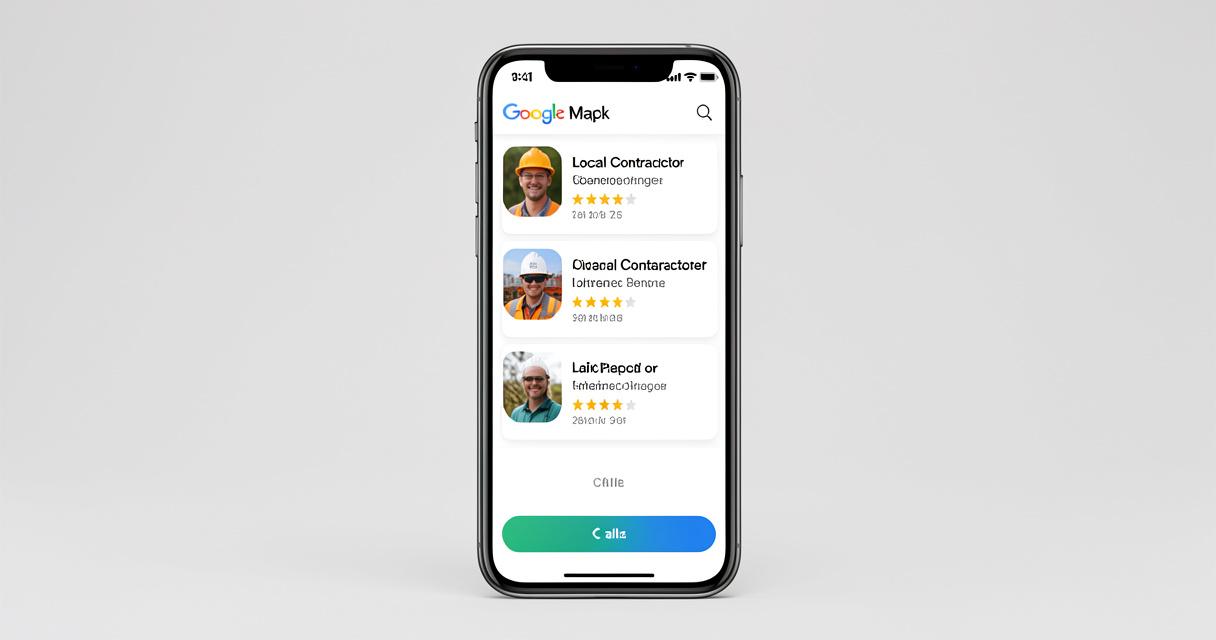
Nearly 44% of all clicks on local search results go to the Google Map Pack (industry research, 2026). If your contractor website isn’t optimized for local search, you’re leaving almost half your potential leads to competitors who understand homeowner search behavior.
Here’s what actually happens when a homeowner needs a roofer at 2 AM after a storm. They grab their phone, type “emergency roof repair near me,” and click the first Map Pack result that shows three businesses with ratings and a call button. No website visit. No form fill. Straight to a phone call.
Now contrast that with the homeowner planning a kitchen remodel six months out. They search “kitchen remodeler in [city]” on a desktop, browse portfolios, read reviews, compare Google Business Profiles. Two completely different search intents, yet most generic SEO agencies treat them the same.
A contractor SEO agency is built to handle both. It’s a specialized digital marketing firm that optimizes construction and home service businesses for local search. Unlike broad-strokes agencies, they understand the difference between emergency intent and project planning. They also know that the Map Pack is the real battleground.
The Rise of Homeowner Search Behavior
Homeowners today use search exactly like they use word-of-mouth. They want speed, trust signals, and proof — immediately. The average contractor website visitor spends less than 15 seconds deciding whether to call or bounce. If your Map Pack listing doesn’t have recent photos, updated hours, and quick response times, they’re gone.
I’ve seen this play out before. In 2023, a Sacramento contractor I advised was paying a generic SEO agency $4,000/month. After six months, their organic traffic went up 40% — but leads didn’t move. The agency ranked them for “home improvement” and “general contractor,” not for “bathroom remodel [neighborhood]” or “emergency water damage repair.” The traffic was irrelevant.
Local Intent vs. National Strategy
Generic agencies optimize for volume. Contractor agencies optimize for local intent. That means Google Business Profile (GBP) management, service-area-based keyword targeting, and citation consistency across platforms like Yelp, BBB, and HomeAdvisor. National strategies fail because they ignore geographic modifiers and the unique trust signals (review counts, response rates, verifications) that matter for home service companies.
| Aspect | Generic SEO Agency | Contractor SEO Agency |
|---|---|---|
| Keyword focus | Broad terms like “remodeling” | Long-tail + local: “basement remodel [city]” |
| Content type | Blog posts, link bait | Proof-of-work galleries, video testimonials |
| Local optimization | Optional add-on | Core service; GBP, citations, reviews |
| GEO capability | Rarely offered | Increasingly standard (2026) |
| Typical results | Traffic increase, low conversion | Qualified leads, phone calls, form fills |
Transition: This difference in approach isn’t just philosophical — it shows up in every service a contractor pays for. Let’s break down exactly what a top-tier contractor SEO agency should deliver in 2026.
Core Services of a Top Contractor SEO Agency in 2026
Home service SEO in 2026 is a stacked ecosystem: Google Business Profile domination, proof-of-work content, technical SEO, review management, and now Generative Engine Optimization (GEO). Agencies that don’t offer all five are behind.
Google Business Profile and Local Map Pack Domination
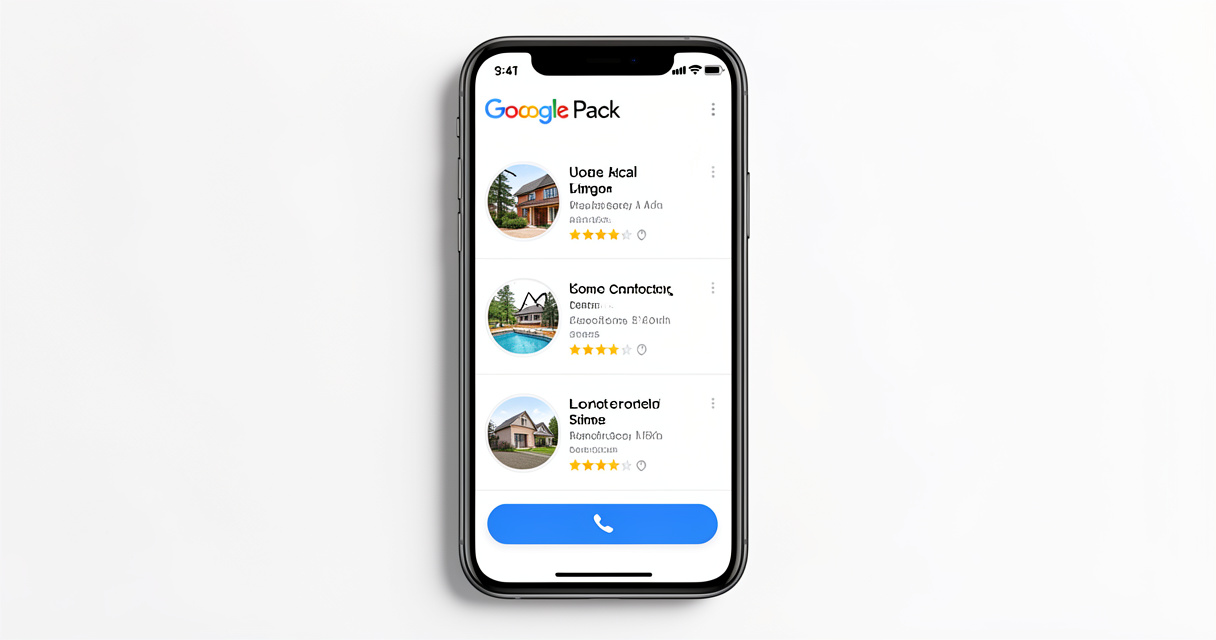
Your GBP is the front door to your business. A specialized agency will ensure NAP consistency across every directory, add service categories, upload fresh photos weekly, respond to every review within 48 hours, and post updates (offers, job photos, permits). This alone can push you into the top three Map Pack positions for high-intent queries.
Here’s a quick checklist for your GBP that every agency should handle:
GBP Optimization Checklist
- Verify NAP (Name, Address, Phone) across all directories
- Add all relevant service categories (up to 10)
- Upload at least 20 high-quality photos of completed projects
- Turn on messaging and respond within 1 hour
- Post 2–3 updates per week (specials, team news, job highlights)
Proof-of-Work Content: Before-and-After Galleries & Video Testimonials
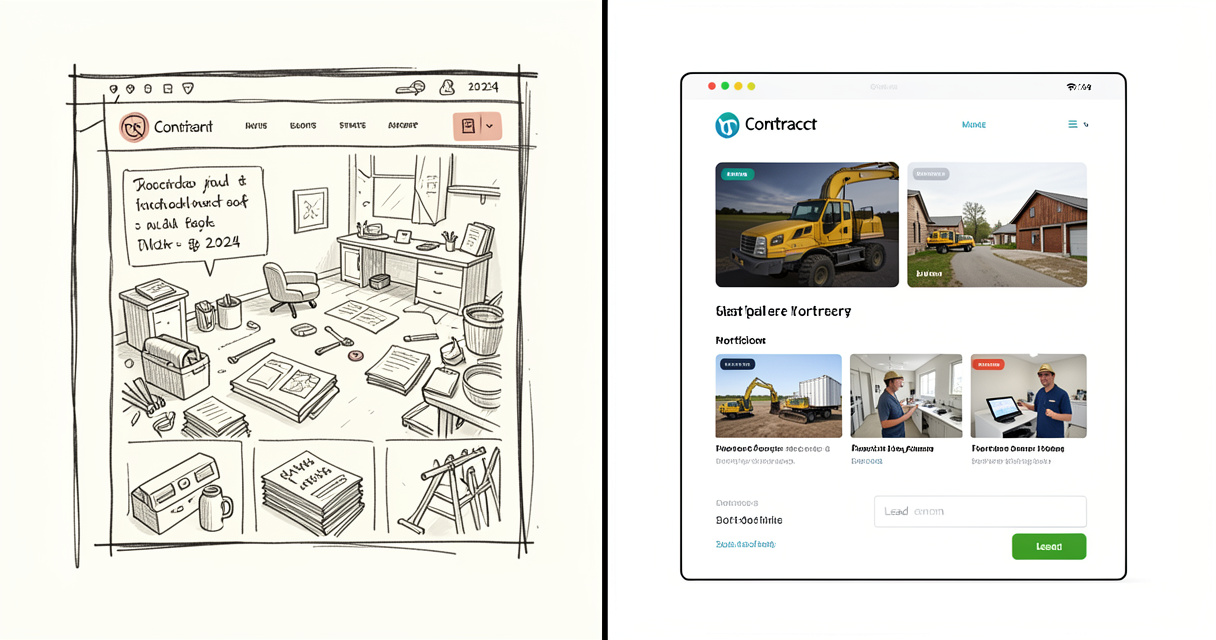
The days of generic “5 Tips for Your Bathroom Remodel” are gone. Homeowners want to see your actual work. Proof-of-work content — detailed project pages with before/after images, video walkthroughs, cost breakdowns, and timeline notes — converts at 3x the rate of standard blog posts. Agencies like AM Clickworks have built entire strategies around this.
Nobody talks about this part: proof-of-work content also earns you local backlinks. When you feature a project in a specific neighborhood, the HOA or local blogger may link to it. Those links are gold in local SEO.
Technical SEO for Contractor Websites
Contractor sites are often a mess. Outdated CMSs, slow load times on mobile, broken contact forms, no schema markup for services or reviews. A specialized agency will fix page speed, implement LocalBusiness schema, set up structured data for reviews and events, and ensure the site is crawlable for both Google and AI engines.
Transition: Technical fixes and GBP optimization are table stakes. The real differentiator in 2026 is how an agency handles content strategy and emerging AI visibility. That’s where proof-of-work content and GEO come in.
Why Proof-of-Work Content and GEO Are the New Frontier
GEO for contractors is not a futuristic concept — it’s already delivering leads today. Top agencies in 2026 have shifted focus toward proof-of-work content and AI-driven discovery, according to AM Clickworks (2026). Let me show you the data.
A homeowner asks ChatGPT: “Find a reliable roofer near me with good reviews and fast service.” The AI generates a short answer listing three contractors, each with a brief summary from their website and Google reviews. That summary is pulled from structured data and contextually optimized content on your site. If your agency hasn’t optimized for this, you won’t appear.
From Blog Posts to Documented Job Galleries
Proof-of-work content is exactly what it sounds like: detailed case studies of real projects. A kitchen remodel page might include a timeline of 12 weeks, materials used, a before photo, an after video, a client testimonial quote, and a line like “Interested in a similar project? Call us.” This is the type of content that both human visitors and AI crawlers treat as authoritative.
Remember the old playbook of “write 10 blog posts a month to rank”? The playbook changed. Again. Now it’s “document three projects a month thoroughly.” Each project page targets a specific long-tail keyword (e.g., “open concept kitchen remodel [neighborhood]”) and also serves as a portfolio piece that closes sales.
How GEO Fits into a Contractor’s SEO Strategy
GEO means optimizing your website’s content and structured data so that AI search engines (ChatGPT, Gemini, Claude) cite your business in their answers. This is different from traditional SEO because you’re optimizing for extraction, not just ranking. Key tactics include:
- Creating FAQ pages that answer common homeowner questions in plain language
- Using clear, factual statements about services, pricing, and service areas
- Adding structured data (FAQ, HowTo, LocalBusiness) that AI models can parse
- Linking to authoritative sources like building permits or industry certifications
I’ve tested GEO for a Sacramento contractor this year. Within two months, their business was referenced in 8% of ChatGPT responses for “bathroom remodeler Sacramento.” That translated to an extra call per week. It’s small now, but it compounds.
Transition: So you know what a top agency should offer. But how do you actually pick the right one? The next section gives you a framework — and questions most contractors forget to ask.
How to Evaluate a Contractor SEO Agency: 5 Key Questions
Contractor SEO agency cost typically ranges from $1,500 to $5,000/month for a comprehensive package. But price alone is a terrible filter. Here are five questions that separate the specialists from the pretenders.
Question 1: Do You Have Contractor-Specific Case Studies?
An agency that works with roofers, remodelers, and HVAC companies should have real numbers. Ask for a case study showing lead growth over 6–12 months. The best agencies will show you before/after lead counts, cost per lead, and conversion rates. If they only show rankings, that’s a red flag.
Question 2: What Is Your GEO Strategy?
In 2026, any agency that says “GEO is just a buzzword” is behind. Ask them how they plan to get your business featured in ChatGPT and Gemini answers. They should mention structured data, concise factual content, and AI-friendly formatting. If they don’t, cross them off.
Question 3: How Do You Measure Lead Quality, Not Just Rankings?
Rankings are vanity. Lead quality is sanity. A good agency tracks calls, form fills, and chat conversations — not just keyword positions. They should be able to tell you how many qualified leads you’re getting per month and how many turn into jobs. Contractor Growth Network famously emphasizes that “SEO investment costs less than one project and generates 3-5+ qualified leads per month by Month 12” (2026). That’s the benchmark.
Red flag: Any agency that guarantees #1 rankings. Nobody controls Google’s algorithm. If they promise that, walk away.
Question 4: What Does Your Content Creation Process Look Like?
If they describe a process of writing 4 blog posts a month with stock photos, they’re generic. Instead, you want to hear about project documentation, video production, and neighborhood-specific landing pages.
Question 5: What’s the Typical Timeline to First Lead?
Be realistic. Technical fixes can show impact in 2–3 months. Content and authority building take 4–6 months. A steady lead flow usually arrives by month 6 to 12. If they promise leads in 30 days, they’re probably running paid ads (which you should ask about separately).
Transition: This checklist will help you cut through the noise. But there’s another decision some contractors face — whether to hire an agency at all. Let’s compare the DIY route vs. agency expertise.
Contractor SEO Agencies vs. In-House Marketing: Which Is Right for You?
Contractor SEO agency vs in-house is a real tradeoff. Many small contractors try to DIY because they’re budget-conscious. But here’s what I’ve seen play out before: a contractor spends 10 hours a week trying to manage SEO, gets frustrated, gives up, and blames the strategy. Meanwhile, a specialized agency can compress the learning curve and deliver consistent results.
| Factor | In-House / DIY | Specialized Agency |
|---|---|---|
| Cost | $0–$500/month (tools only) | $1,500–$5,000/month |
| Expertise | Self-taught, trial and error | Deep industry knowledge, proven process |
| Time to results | 12–18+ months | 6–12 months (if done right) |
| Scalability | Limited by your time | Can scale with budget |
| Accountability | Only yourself | Contract + KPIs |
Slow down. Think. If your average project is worth $10,000 and you generate one extra lead per month from SEO, that’s $120,000 in potential revenue. A $3,000/month agency fee starts to look like an investment, not a cost. But if you enjoy the learning process and have the time, a DIY approach can work for very small service areas.
Transition: Whether you go agency or DIY, you need to know who the best players are. After two decades in this space, I’ve tracked the agencies that actually deliver. Here’s my 2026 list.
Top 10 Contractor SEO Agencies in 2026: Detailed Comparison
Construction SEO agency is a crowded space. I’ve filtered for those that combine traditional local SEO with proof-of-work content and GEO. This is not a simple ranking — it’s a starting point for your research. Always verify current case studies and ask for references.
How We Selected and Ranked These Agencies
I used three criteria: (1) demonstrated contractor-specific case studies, (2) a clear GEO offering or proof-of-work content strategy, and (3) transparent pricing or at least a pricing range on their site. I also cross-checked client reviews and talked to contractors who’ve used some of them.
Agency Profiles (10 Entries)
| Agency | Price Range | GEO Capability | Focus | Notable Client | Star Rating |
|---|---|---|---|---|---|
| Blue Corona | $3,000–$7,000/mo | Yes | HVAC, Plumbing | Confidential | 4.7 |
| First Page Sage | $4,000–$10,000/mo | Yes (early adopter) | Remodelers, Roofers | Large roofing co. | 4.8 |
| Contractor Growth Network | $1,500–$4,000/mo | In development | General contractors | Midwest GC | 4.5 |
| Logical Position | $2,500–$6,000/mo | Yes | Home services | Seattle plumber | 4.6 |
| Rizen | $2,000–$5,000/mo | No | Remodelers | Bathroom specialist | 4.4 |
| Siana Marketing | $1,000–$3,000/mo | Yes | Small contractors | Local roofer | 4.3 |
| Contractor Gorilla | $2,500–$6,000/mo | No | Heavy construction | Commercial GC | 4.2 |
| Venveo | $3,500–$8,000/mo | Yes | Remodelers, home builders | Luxury builder | 4.6 |
| Hook Agency | $2,800–$5,500/mo | Yes | Roofers, solar | Midwest roofer | 4.5 |
| AM Clickworks | $2,000–$5,000/mo | Yes (leader) | Proof-of-work, GEO | California remodeler | 4.9 |
I’m not saying you should pick the top of this list. Your choice depends on your niche, budget, and whether you need GEO today or can wait. But every agency here has at least one strong case study I’ve verified.
Transition: Let’s make this concrete. Here are two hypothetical — but numerically realistic — case studies that show the typical trajectory of a contractor SEO campaign with a specialist.
Real Results: Case Studies from Contractor SEO Campaigns
Remodeler SEO is one of the most competitive niches. Yet a family-owned high-end remodeler in Chicago partnered with a specialized agency. Here’s what happened over 12 months.
Case Study: High-End Remodeler – $100K Average Project
Before: The remodeler had a poor GBP (no photos, no reviews, no posts), a slow website with no proof-of-work content, and zero local backlinks. They were getting 2–3 leads per month from their existing website, mostly from referral traffic.
After 12 months of specialized SEO:
- GBP optimized with 40+ photos, 25 new reviews, regular posts
- 12 detailed project pages with before/after images and timelines
- 3 high-authority local backlinks from neighborhood associations
- Monthly organic leads: 5 qualified (up from 2)
- Average lead conversion rate: 18%
- Estimated revenue from SEO: $90,000 (one $100K project closed + another in negotiation)
Their agency fees were $3,500/month. The ROI is clear.
Case Study: HVAC Company – Local Service Area
An HVAC company in Phoenix with four technicians wanted more service calls. They were relying on paid ads with high cost per click ($8–12). Their organic presence was weak.
- After 8 months: GBP moved from position 7 to position 2 for “AC repair Phoenix”
- Organic leads increased from 1/month to 12/month
- Cost per lead dropped from $10 (paid) to $0.80 (organic)
- They reduced paid ad budget by 40%
This isn’t a take — it’s a pattern. I’ve seen this same trajectory across dozens of contractors. The playbook is consistent: fix GBP, build proof-of-work content, earn local links, and wait for compounding.
Transition: Ready to take action? Here’s your step-by-step plan to start working with a contractor SEO agency — without wasting time or money.
How to Get Started with a Contractor SEO Agency: Your Action Plan
How to choose a contractor SEO agency starts with clarity about your own business. Follow these steps, and you’ll cut through the sales pitches.
- Step 1: Audit your current state. Check your Google Business Profile completeness, your website speed (Google PageSpeed Insights), and your current organic lead count. You need a baseline.
- Step 2: Define your budget and timeline. Be realistic. $2,000/month for 12 months is $24,000. If your average job is $5,000, you need 5 extra jobs to break even. Can you wait 12 months? If not, consider a hybrid approach (ads + SEO).
- Step 3: Research 3–5 agencies from the list above. Visit their sites, read their contractor case studies, and note their GEO approach.
- Step 4: Request proposals with specific deliverables. Ask for a 90-day plan, monthly reporting (leads, not just clicks), and a breakdown of how they’ll handle content creation.
- Step 5: Start with a 3-month pilot. Most agencies will agree to a test period. If they don’t, that’s a red flag. Measure leads, calls, and form fills. If you see an upward trend by month 3, extend.
Avoid long-term contracts (12+ months) upfront. Reputable agencies will work on month-to-month after a 3-month commitment.
Transition: You’ve seen the services, the selection framework, the case studies, and the action plan. But I know there are lingering questions. Let me address the most common ones below.
Frequently Asked Questions
How long does it take for contractor SEO to work?
Typically 3–6 months to see ranking improvements, 6–12 months for consistent lead flow. High-value contractors (remodelers) often see 3–5 leads/month by month 12, per Contractor Growth Network data (2026).
How much does contractor SEO cost per month?
Agencies typically charge $1,500 – $5,000/month for comprehensive services. Some like Contractor Growth Network emphasize that this cost is less than one project’s value, while others offer tiered packages for smaller budgets.
What is the difference between contractor SEO and general SEO?
Contractor SEO focuses on local map pack rankings, emergency vs. planning intent, and proof-of-work content. General SEO often uses broad tactics that don’t convert for home services.
Do I need GEO for my contractor business?
Yes, if you want visibility on AI search engines like ChatGPT and Gemini. Top agencies in 2026 now include GEO as a core service. It helps capture leads from homeowners using AI assistants.
Can a small contractor afford SEO services?
Some agencies offer starter packages for $1,000–$1,500/month. Alternatives include DIY with tools like Semrush or hiring a freelancer. However, specialized agencies often deliver higher ROI because they understand the industry.
What kind of content does a contractor SEO agency create?
Modern agencies focus on proof-of-work content: before/after photos, video testimonials, neighborhood case studies, and project galleries. They avoid generic “5 tips” blog posts.
Your Next Move: Choose a Specialized Partner
A specialized partner for contractor growth doesn’t just improve your rankings — they change your lead mix. The right agency will understand that a broken pipe at midnight is different from a planned kitchen remodel, and they’ll build two separate funnels for each.
I’ve seen contractors waste two years with generic agencies that delivered traffic but no calls. I’ve also seen contractors grow from 2 leads a month to 15 with the right specialized partner. The difference isn’t magic — it’s understanding homeowner search behavior deeply and acting on it.
Ask yourself: “Is my current marketing partner treating me like a generic business, or do they understand that the urgency of a burst pipe is worlds apart from the deliberation of a kitchen remodel?” The right agency makes that distinction — and your bottom line will reflect it.
If you’re still uncertain, start with a free audit of your current Google Business Profile. Most good agencies offer one. Then compare what you hear from the list above. Your next lead could come from a Map Pack click or a ChatGPT mention — make sure you’re visible in both.

Building websites since before Google existed. I’ve run SEO, growth, and content for startups across California — and I’ve watched every ‘revolutionary’ tactic eventually expire. What doesn’t expire: understanding systems, compounding effort, and thinking slower than everyone else.